
Brief Overview of Astronomy in Indonesia
Astronomy activities in Indonesia are broad and diverse , due to that the interest was driven by different community interests enriching the activities. Briefly, we discuss the activities and the institutions, community-based, and various academics-based related to astronomy in Indonesia carried out:
For Research and Various Academic Activities
BRIN (National Research and Innovation Agency), is the main government body of Indonesia for research and innovation. BRIN was a new organization, previously merged from several offices in 2021, including the National Aerospace Agency (LAPAN). So BRIN carried out research including aerospace technology, science, including astronomy, as well various disciplines of research. Specifically for Space science, BRIN operates several major instruments for astronomy and space science, like the currently in the final phase of the 380 cm telescope in optical, located on Timor island, NTT Province (Fig 1). BRIN also operated several ionosonde for ionospheric study above the equator, and network of magnetometers, both to strengthen Space Weather study above the equator.
Due to the continuation of LAPAN, BRIN is also responsible for international activities related to outer space, like the United Nations Committee on the Peaceful Use of Outer Space (UN COPUOS), as well as the inclusion of Indonesia in BRICS, so BRIN can also hopefully actively contribute to the BRICS Astronomy Working Group.
Not only in astronomy and Space science, but several other themes of research are also carried out in BRIN that are jointly studied with astronomy, like archaeo-astronomy and etno-astronomy, astronomy and education, study for astro-tourism, and various themes related to the new observatory activities are conducted. BRIN welcomes collaboration in various fields utilizing the new observatory. It is expected that the observatory will be ready in 2026.
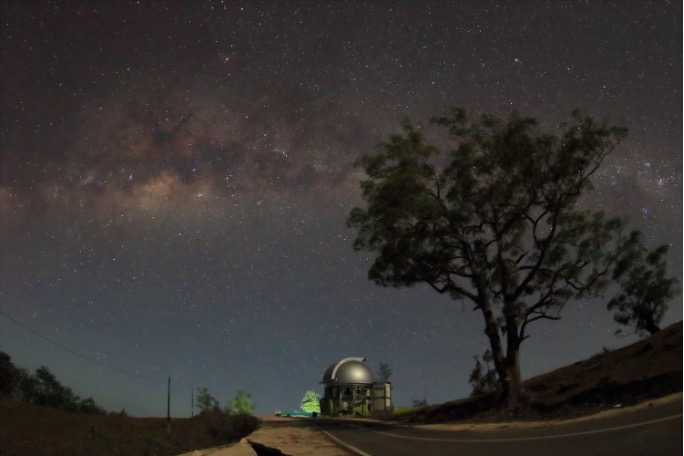
Fig 1. Night view of Timau Observatory, with the dome for 380 cm on earlier development.
Institut Teknologi Bandung (ITB) is one of the oldest universities in Indonesia that carries out astronomy activity – including research and education, with the inclusion of Bosscha Observatory under its stewardship, one of the oldest astronomical observatory in Indonesia. While as the only higher education in Indonesia that provides school from Bachelor to Doctorate, ITB is also actively involved in international collaboration, like actively involved in IAU, EAMA (East Asia Meeting of Astronomy), and SEAAN (South East Asia Astronomy network). Recently, Bosscha Observatory was establishing a new Radio Astronomy in collaboration with the Chinese, the one called VGOS, a 13-m telescope radio telescope (Fig 2). For further inquiry about ITB, the representative for BRICS is Dr. Anton Timur Jaelani, (antontj@itb.ac.id).
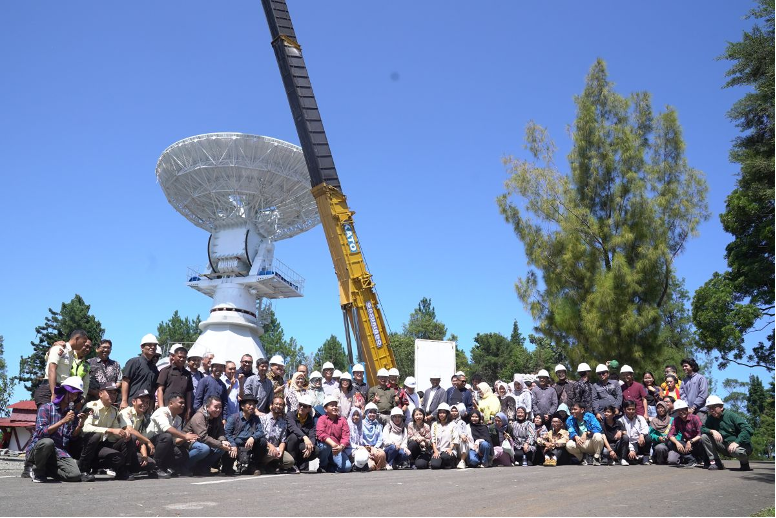
Fig 2. VGOS installation.
UPI (Universitas Pendidikan Indonesia/Indonesia University of Education), while traditionally producing teachers for Indonesian (Keguruan/Pendidikan), but they also contribute to the advancement of basic science, like Physics. Although not specifically providing astronomy in their curriculum, they also include astronomy in the part of Physics, like providing a laboratory for Earth and Space (Laboratorium Bumi Antariksa). Just recently, UPI established a new center, called Pusat Unggulan Sains Data Astronomi dan Polusi Cahaya (Center of Excellence for Astronomical Data Science and Light Pollution). This center provides not only research and education but also actively involved on the community development, like aiding village to be ready for astro-tourism in one of West Java villages (Fig 3). UPI is also part of IAU Office for Education and actively teaches astronomy, in particular for teachers. For further information about the center can email : puu.sadar-polya@upi.edu .
ITERA (Institut Teknologi Sumatera) is one of the younger universities in Indonesia and although open astronomy is one of the courses, emphasis was given on Planetary and atmospheric science. This university is also operating robotic optical observatory, and also actively involved in the network on optical observation (e.g. Pluto occultation in 2022). Contact: robiatul.muztaba@sap.itera.ac.id .
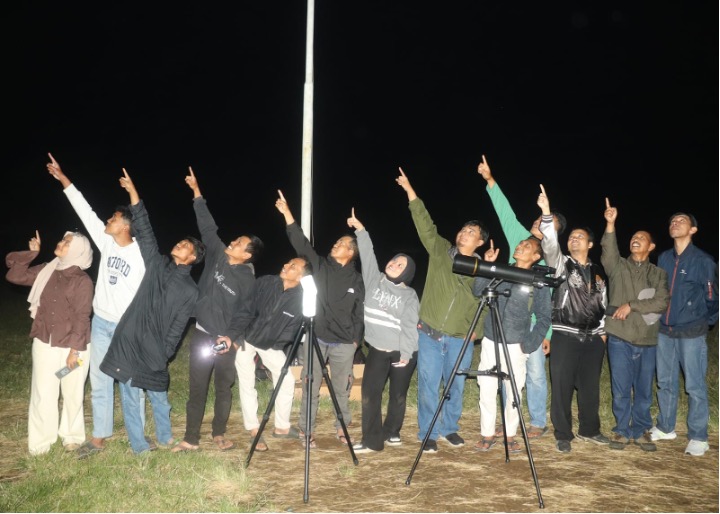
Fig. 3. Activity in Alamendah village, the first Astro-eco-tourism in West Java.
Other Universities. There are several universities in Indonesia, although not specifically providing astronomy, but they include astronomy in Physics, like in UI (University of Indonesia), UGM (Gajah Mada University) among others. There are also islamic universities in Indonesia (UIN/Universitas Islam Negeri), as well private Islamic University (like University of Achmad Dahlan/UAD) that provide astronomy as a part of the Islamic study. Some of these Islamic Universities operate small-medium size (up to 50 cm) telescopes in the observatory, and for one like UIN Wali Songo in Semarang is operating a large size planetarium.
Community based astronomy.
-
-
- HAI (Himpunan Astronomi Indonesia/Indonesian Astronomy Union) is the governing body that bridging astronomy communities in Indonesia. For further contact: budider@itb.ac.id .
- HAAJ (Himpunan Astronomi Amatir Jakarta/Jakarta Amateur Astronomy Union), is the oldest community based astronomy established in Indonesia. This group is helping the operation of the Jakarta Planetarium, the largest in Indonesia, although currently the planetarium is in the state of hiatus. As the oldest community based group, HAAJ is playing an important role in leading the development of community based astronomy interest groups through Indonesia. Contact: humas.haaj84@gmail.com , rayhan0788@gmail.com .
- JOPI (Jaringan Observatorium dan Planetarium Indonesia/Indonesian Network of Observatory and Planetarium) is a network of observatories and planetariums that operate around Indonesia. This network promotes collaboration to support each other members on improving capability on operating observatories, planetariums, and sharing information, hopefully data sharing for future collaboration. Contact: imahnoong@gmail.com , setyanto@gmail.com
- JANAKA (Jambore Nasional Klub Astronomi/National Astronomy Club Jamboree) is a network of various astronomy clubs and communities that gather biennially throughout Indonesia. Contact: robiatul.muztaba@sap.itera.ac.id .
- langitselatan is the new media initiative in this digital era. Since its establishment, langitselatan has led a pivotal role on communicating astronomy and educating people, separating the facts from hoax, as well as bridging the international astronomy community to the local community-based astronomy group through various activities like training and hands-on activity. For further contact: info@langitselatan.com .
- Other communities and groups are established in various parts of Indonesia, mostly connected through JANAKA.
-